
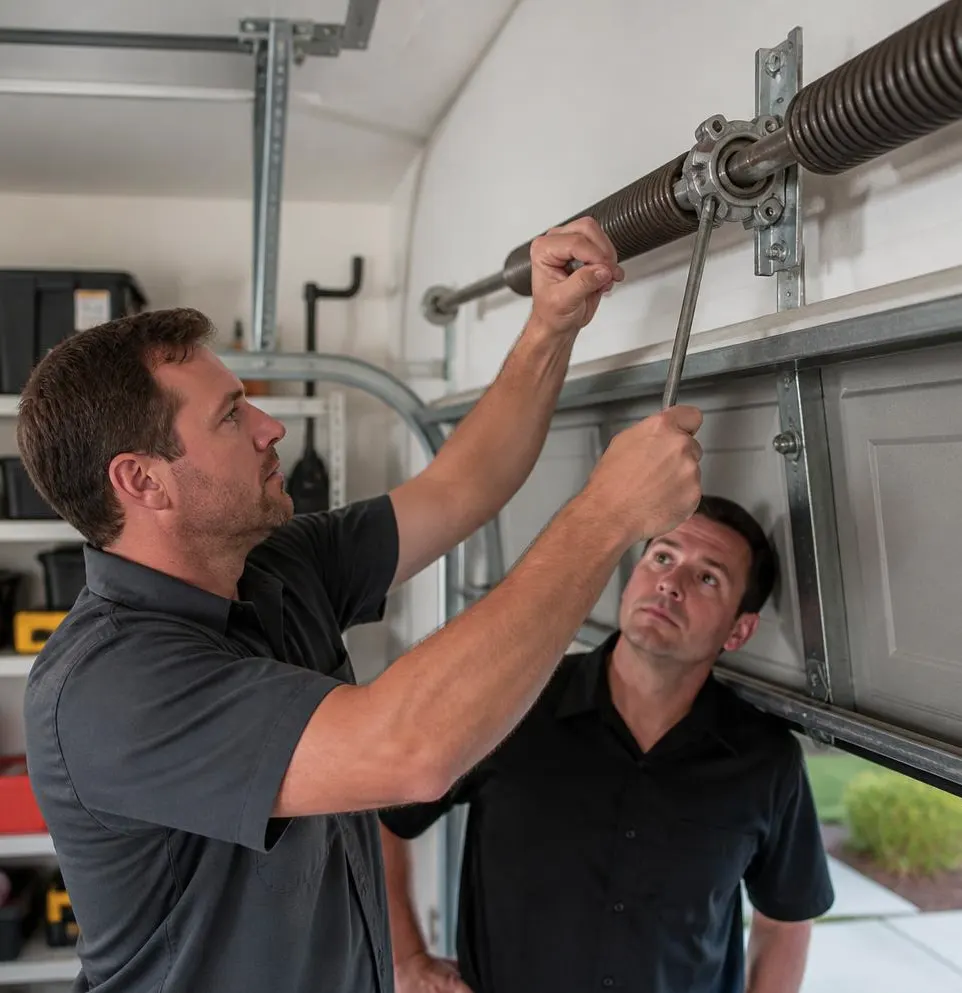
Short answer: pull the red emergency release cord hanging from the trolley to disconnect the door from the opener, then lift or lower the door by hand. When power returns, raise the door fully, pull the cord again (or push the trolley back toward the opener) until it reconnects with a click, then run the opener through a full cycle to confirm it's working correctly.
Power outages aren't rare around here. Ice storms in January and February take lines down, and summer thunderstorms with high wind can do the same. Either way, if your garage is attached to the house or it's the only way in and out, knowing how to move the door by hand matters.
Tools You'll Need
- A flashlight or headlamp (outages often happen after dark or during storms)
- Work gloves, for grip and to avoid pinched fingers on the track
- A step stool if the release cord is high or you're shorter than the opener rail
That's it. No wrenches, no tools against the springs or cables — this is purely a mechanical disconnect, not a repair.
How to Open or Close the Door Manually
- Find the emergency release cord. It's the red handle hanging from a lever on the trolley, the part that rides along the horizontal rail from the opener motor to above the door.
- If possible, do this with the door already closed. A closed door that's disengaged just sits there. An open door that's disengaged can come down fast if the springs are weak or unbalanced, so be ready to control its weight.
- Pull the cord down and toward the opener motor. You'll feel or hear the trolley disengage from the carriage. The door is now fully manual.
- Lift the door slowly with both hands, using the handle or bottom panel. A properly balanced door should feel light and move smoothly on its own tension once started. If it feels heavy, jerks, or stops partway, stop and don't force it — that's a sign the spring isn't doing its job.
- To close, lower it slowly and evenly, guiding it down rather than letting it drop. Since the opener is disconnected, the door won't lock automatically. If your door has a slide bolt lock, engage it, especially overnight.
- Watch the tracks as you move the door. In winter, ice and road salt tracked in on tires can build up grime in the track or stiffen the rollers. If the door binds or skips in the track during manual operation, don't keep forcing it.
How to Re-Engage the Opener Once Power Is Back
- Make sure the door is fully closed or fully open before reconnecting, so the trolley lines up correctly with the carriage.
- Pull the release cord toward the door (the opposite direction from before), or simply push the trolley carriage back along the rail until you feel it lock into the opener's drive mechanism.
- Test it with the wall button or remote first, standing clear of the door's path.
- Run the door through a full open-and-close cycle. Confirm it reverses properly when it hits something (test with a piece of wood or a paper towel roll on the ground under the door) and that it travels the full distance without stalling.
- If the opener doesn't respond at all, check that it's actually getting power — a tripped breaker or a battery backup that didn't recharge are common after longer outages.
What's a Homeowner Job, and What Isn't
Disengaging and re-engaging the trolley, lifting a properly balanced door by hand, and checking for power at the outlet are all things any homeowner can handle safely. Where to stop:
- If the door feels heavy, uneven, or won't stay up on its own when disengaged, the springs are likely worn or broken. Don't keep operating it manually under load — a broken torsion spring can do damage or cause injury, and replacement requires specialized tools.
- If the trolley won't reconnect or the carriage looks bent or disconnected from the belt or chain, that's a mechanical issue inside the opener system.
- If the door comes off track, binds hard, or you hear grinding, especially after an ice storm, stop and leave it as-is rather than risk forcing it further.
When to Call Romeoville Garage Door Service
If your door won't balance properly when disengaged, or the opener won't reconnect after power is restored, that's when it's worth a call. We handle garage door spring replacement for doors that feel heavy or won't stay put manually, and garage door opener repair and installation when the motor, trolley, or carriage isn't working right after an outage. If a storm knocked the door off track or damaged the opener outright, our emergency garage door service covers that too, so you're not stuck manually propping the door for days.
If you're dealing with a garage door that's not cooperating after a power outage, or you just want it checked before winter ice storms start, call Romeoville Garage Door Service. We serve homeowners throughout Romeoville, IL and the surrounding area, and we'll get your door moving the way it should.